Greeting
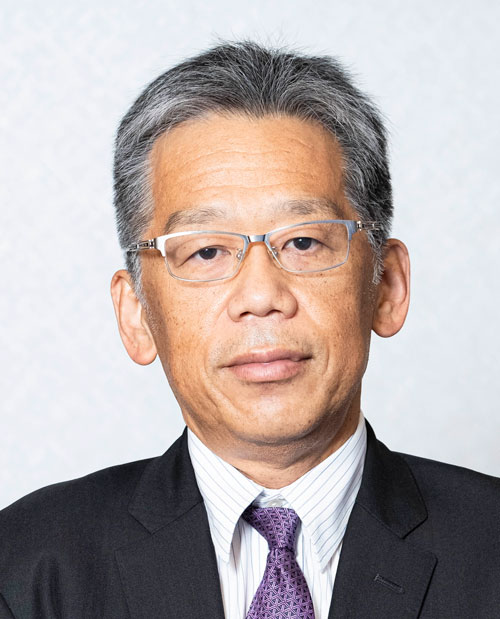
Nobuyuki Yamamoto, MD, PhD
President, The 67th Annual Meeting of the Japan Lung Cancer Society
Professor, Department of Internal Medicine III (Pulmonary Medicine and Medical Oncology)
Wakayama Medical University Graduate School of Medicine
I am honored to serve as President of the 67th Annual Meeting of the Japan Lung Cancer Society, which will take place in Kobe, Japan, from December 3 to 5, 2026.
In recent years, our world has faced increasing uncertainty and instability. Climate change has brought unprecedented weather patterns, with global temperatures reaching record highs, while international conflicts in various regions continue to affect global society. Japan, too, faces serious internal challenges, including a declining birthrate, an aging society, and a shrinking population. In the field of healthcare in particular, shortages of medical personnel and worsening financial conditions raise growing concerns about the sustainability of our medical systems.
Even under such circumstances, science continues to advance steadily. In particular, information processing technologies have made remarkable progress. It is often said that by around 2045, a “Singularity” may occur—an era in which artificial intelligence surpasses human intelligence, giving rise to innovations beyond our current imagination.
At a time like this, we have chosen a forward-looking theme for this meeting: “Lung Cancer Management toward a Post-Singularity Era – Painting the Future on the Canvas of Life.” Through this theme, we express our desire to look ahead without looking back, to place our hopes in the future, and to support researchers dedicated to developing new medical technologies and treatment strategies. The conference poster depicts a monster inspired by Yamata-no-Orochi, a legendary multi-headed serpent from Japanese mythology, symbolizing lung cancer. It is confronted by promising young physicians—surgeons, radiation oncologists, palliative care specialists, and medical students engaged in AI research—representing a future in which the next generation skillfully harnesses rapid scientific advances to overcome lung cancer.
For this meeting, we have invited approximately 40 outstanding young researchers to serve as members of the Scientific Program Committee. Together, they have developed a wide range of programs spanning internal medicine, surgery, radiology, pathology, and basic and translational research. In addition, reflecting my own areas of interest, we have incorporated programs focusing on Patient and Public Involvement, supportive care, and databases and registries. The meeting also features a strong emphasis on artificial intelligence, with a range of related sessions and activities.
For the Special Lectures, we are honored to welcome Professor Shimon Sakaguchi, recipient of the Nobel Prize in Physiology or Medicine, and Professor Kenjiro Kimura, who is pioneering innovative imaging diagnostic systems through applied mathematics. We greatly look forward to their insights.
This meeting has been designed to be meaningful not only for members of the Japan Lung Cancer Society, but also for other healthcare professionals, patients and their families, and the general public. We sincerely hope that many of you will join us in Kobe to share your perspectives on the future of lung cancer care and to engage in meaningful discussion together.